









Mexican cartels are building luxury fleets bystealing U.S. rental cars
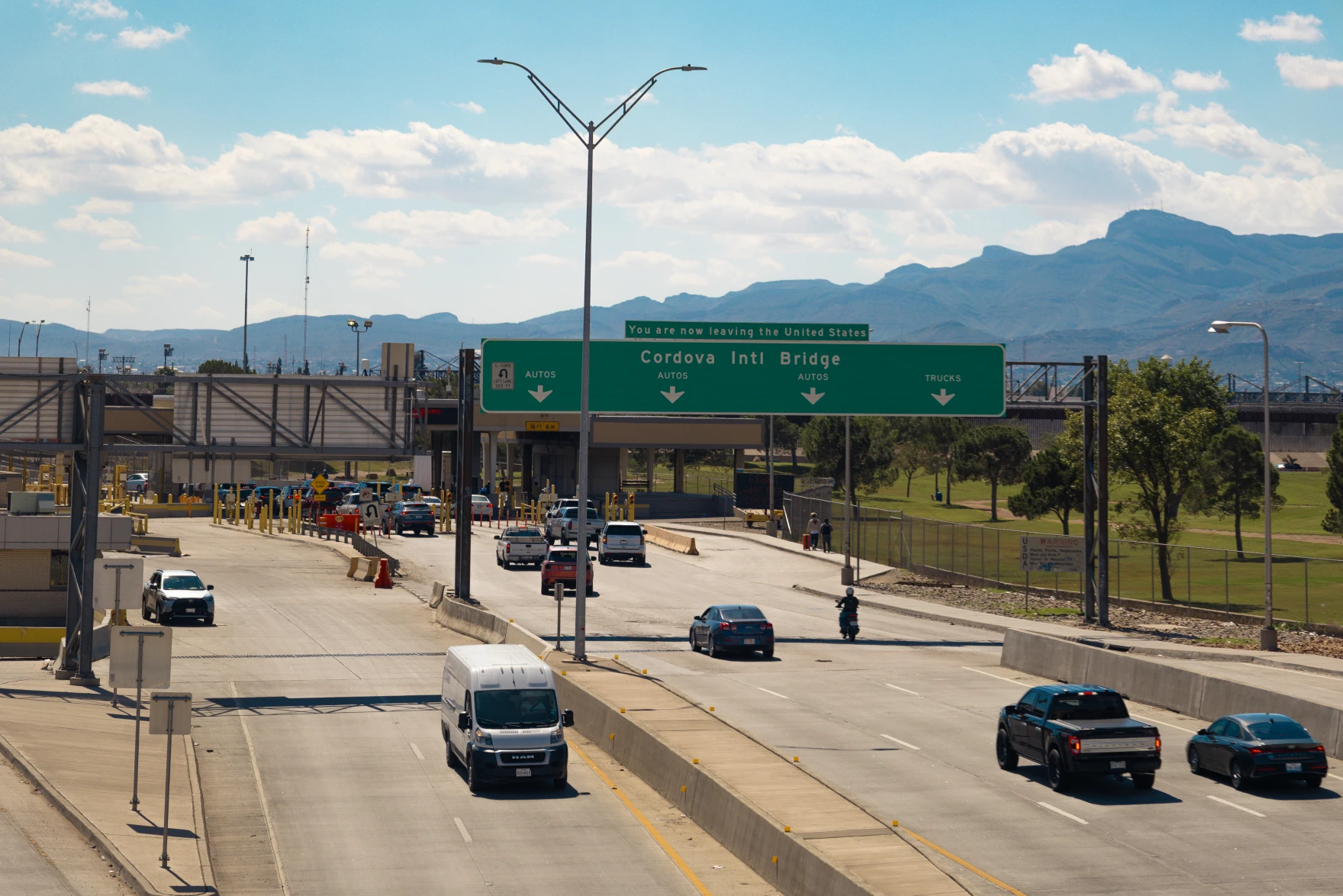
Foto: David Castañeda-Molina for Puente News Collaborative
By Steve Fisher
MEXICO CITY – Mexican cartels are stealing cars and trucks from U.S. rental agencies at an
alarming rate, spiriting thousands of vehicles across the border each year to keep top capos in
the latest model BMWs and Cadillacs.
Law enforcement agencies and companies charged with trying to recover stolen vehicles say that
while much of the theft happens in border states, particularly Texas, cartels have stolen vehicles
from as far away as New York, Chicago and Miami. But California remains the top target.
Los Angeles Police Department Sgt. Juvey Mejia, a member of the Task Force for Regional Auto
Theft Prevention, said the cartels love heavy-duty pickup trucks and Jeeps.
“Anything that can drive through tough terrain to get away from border patrol so they can move
dope,” Mejia said.
Along with Chevy Suburbans, Ford Raptors and Toyota pickups, the vehicles of choice include
Cadillac Escalades and BMW SUVs, according to people whose job is to recover them. To battle
rival cartels or authorities, cartels sometimes convert the trucks into mutant-tanks, adding
heavy ballistic-proof steel plating, firing ports and gun mounts.
The thefts don’t require much stealth: vehicles are rented by cartel operatives and then driven
across the border.
California sees significant theft, in part, because of its restrictive privacy laws
on GPS tracking of rental vehicles, according to Sharky Laguana, owner of Bandago Van Rentals
based in San Francisco.
Unlike other states, California requires rental agencies to wait to turn on GPS tracking until the
vehicle return deadline has passed and the renter has been notified. By then, most stolen
vehicles are deep into Mexican territory.
“California allows criminals to take advantage of the fact that we are not allowed to see where
the vehicle is until it’s too late,” Laguana said.
The American Rental Cars Association, a trade group, said in a statement that California laws make it harder to recover vehicles.
“Members are reporting a sharp increase in rental vehicle theft from California into Mexico,
where California law uniquely restricts rental fleet operators from accessing technology to
protect and recover their assets,” an association said in a statement. “The result is millions of
dollars in annual theft-related costs.”
The number of rental cars stolen in the United States and taken to Mexico each year is unknown,
but it is believed to be in the thousands. Businesses charged with recovering the vehicles
estimate only a small percentage of them are ever found.
But statistics compiled by the California Highway Patrol give some sense of the problem.
According to the CHP, since 2023, about 850 vehicles stolen in California have been recovered
each year in Mexico. The numbers do not distinguish which cars are rentals or privately owned,
but rental industry representatives estimate that many are rentals.
Early this year, criminal groups stole 10 new Ram pickup trucks from Oakland, Los Angeles and
Las Vegas airports, according to private investigators. The trucks ended up in Jalisco state in
regions controlled by the violent, New Generation Jalisco Cartel.
The private investigators recovered one with help from the Mexican army. Security forces also
seized a cache of .50 caliber Browning and Barret weapons.
In another haul this year, thieves stole six 2026 Jeep Wranglers from Oakland and Las Vegas.
Four have been recovered so far. Private investigators believe the vehicles were destined for the
Sinaloa Cartel.
The same investigators received requests last week to recover a dozen stolen Rams that were
tracked to Sinaloa and seven to Durango state.
“For the cartel, it is the cheapest way for them to do business,” said Kevin Carter, owner of
Collateral Consultants, a rental car recovery company in Texas.
“There’s no sense in them buying a car when they could rent one for a few hundred bucks, and it’s theirs forever.”
Along with California, Texas and Arizona are the other top targets for Mexican criminal groups.
One tactic involves cartels hiring people in the U.S. via social media to rent a vehicle for five
days, get the damage waiver, that includes covering the car if it is stolen, and then leaving the
keys in the vehicle still parked in the rental parking lot. An operative arrives, picks up the car
and drives it south to Mexico.
In other cases, thieves will rent the vehicle online or at a kiosk using a stolen identity, said
Mejia, the LAPD officer. Since the pandemic, it’s not unusual for people to wear protective
masks, so the renter will wear a mask to hide their identity from the kiosk camera. “They know it
won’t be traced back to them,” Mejia said.
The process for reporting a stolen rental vehicle varies from state to state, but it is often tedious.
It can take three days after the vehicle has gone missing for a company to prepare a demand
letter to the renter seeking the return of the vehicle. The notification is required before a vehicle
can be reported stolen, and it can take another two days to send the letter by certified mail.
Depending on the state, a company might have to wait up to nine days to report the theft to
police. Only then can it appear on the U.S. National Crime Incident Database, the FBI-managed
database where stolen vehicles are reported.
More days will pass before the VIN number is registered in Mexico’s stolen vehicle database. If
the car or truck was rented in one state, set to return in another state and crossed into Mexico
via a third, the coordination required between three state law enforcement agencies can make
timely recovery of the vehicle even more complicated.
Many vehicles are never registered in the U.S. stolen car database.
Carter, from Collateral Consultants, said that of the around 1 million cases he has seen in his 15
years recovering rental vehicles in the U.S. and elsewhere, less than half made it onto the U.S.
database.
A vehicle is not considered officially stolen until it appears in the registry. Large rental agencies
often don’t bother recovering vehicles that disappear across the border and consider the loss a
cost of doing business, Carter said.
“It’s a calculated risk to most of the big companies,” he said.
While insurance companies insure rental agencies against vehicle damage, they do not cover
theft, according to Luguana of Bandago Van Rentals. Most agencies are self-insured, meaning
the loss of a vehicle cuts into their bottom line, he said.
Though sometimes the target is a single vehicle, authorities have also uncovered larger theft
operations.
In 2024, the Colorado attorney general’s office indicted 17 people associated with the Sinaloa
cartel, accusing them of stealing 190 new Ford F150s and luxury suburbans near the Denver
airport. The cartel operatives drove the stolen vehicles, valued at nearly $10 million, south to
Mexico, according to court documents, and exchanged them for cocaine, fentanyl and
methamphetamines.
In the Texas border city of Laredo, Deputy Police Chief Timothy Tubbs said he has seen a 50%
increase in the theft of rental vehicles — about 10 a month.
“They have seen how easy it is to steal a rental car, and the process it takes to report it,” Tubbs
said of criminal groups. And the vehicles are supporting drug trafficking into the U.S., he said.
“These stolen vehicles empower the cartels,” Tubbs said. “It is another tool for them to continue
their smuggling and continue their violence.”
Once the vehicles are in Mexico, operatives approach corrupt Mexican officials, change out the
U.S. license plates for Mexican plates and register the vehicles on Mexico’s online car registry
platform, according to car recovery experts. Authorities install a chip that is scanned by
machines along federal highways. The chips are supposed to flag stolen cars and trucks, but
since the Mexican plates are valid, the vehicles are never listed as stolen.
In the United States, stolen vehicles are far more likely to be identified, experts said, for a variety
of reasons – a routine maintenance check or scan by a highway license plate camera could
trigger an alert. But once it arrives in Mexico, it essentially vanishes.
“It crosses that border, it is a brand new car,” Carter said.
Cartels steal more cars and trucks when turf wars break out because they require more
resources, one U.S. law enforcement official said. And in recent years, cartels have increasingly
splintered as leaders have been arrested.
One of the more dramatic examples is the Sinaloa Cartel, founded by the now imprisoned
Joaquín “El Chapo” Guzmán. His sons, known as Los Chapitos, are fighting a rival faction for
control of the criminal group.
The ruthless Jalisco Cartel has fought to expand its territory warring with groups from Baja
California to Michoacán and Chiapas states and is fighting wars on multiple fronts as it seeks to
expand its presence.
Though many stolen vehicles disappear, some are recovered. In Guerrero state last November,
the Mexican army seized a Toyota TRD Pro and other vehicles loaded with high-caliber weapons
and nearly half a ton of meth.
According to sources familiar with another recovery, in August a member of the New Generation
Jalisco Cartel went to the border city of Mexicali to pick up a tractor-trailer with a 2026 Cadillac
Escalade and a late model Ram hidden inside, apparently to evade the stolen car detection
system until they could be outfitted with Mexican plates.
But private investigators hired to recover the Cadillac began tracking it. They asked not to
identify their tracking methods to avoid tipping off criminals. The investigators notified the
Mexican army, providing the license plate number.
Their tracking method allowed them to see the vehicle was on the move, passing through toll
booths and military check points, but without setting off alarms. At one check point, National
Guard soldiers opened the trailer and, finding a wall of hay bales, let it pass.
At the next check point, however, soldiers pulled back the bales to reveal the Cadillac and Ram.
The driver said he was to be paid nearly $1,500 for the trip and admitted the cars were bound
for drug lords.
This story was supported by a grant from the Fund for Investigative Journalism.
Fisher is a special correspondent.
This article is a collaboration between the Los Angeles Times
and Puente News Collaborative, a bilingual nonprofit newsroom.
Reporting for this article was supported with a grant by the Fund for Investigative Journalism.